







Best Sellers From This Category:
How to Choose the Best Caravan Air Conditioner
Quite simply - The best caravan airconditioner for your needs will very much depend on the ambient temperatures you will be exposed to. If your air conditioner cannot operate above or below certain temperatures - it may be useless no matter what size, type or shape Caravan, Pop Top, or RV you have.
Australia’s climate is unforgiving, but your caravan doesn't have to be. We stock the country's largest range of premium RV air conditioners from Dometic, Truma, MyCoolman, and Gree. Whether you need a low-profile rooftop unit or a space-saving under-bunk system, our hardware ensures efficient cooling and heating in the harshest off-grid conditions.
Talk direct to the experts at Caravan RV Camping who will be able to advise the best performing caravan airconditioner for your setup and planned travelling destinations. Phone - 1800 RV PARTS (1800 787 278)
Otherwise if you are looking at buying or installing caravan airconditioning and want more information - keep reading. It will pay to view this list of Frequently Asked Questions that will help you correctly choose the best air conditioner for your setup.
What's the Difference Between Household and a Caravan or RV Air Conditioner?:
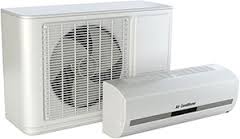
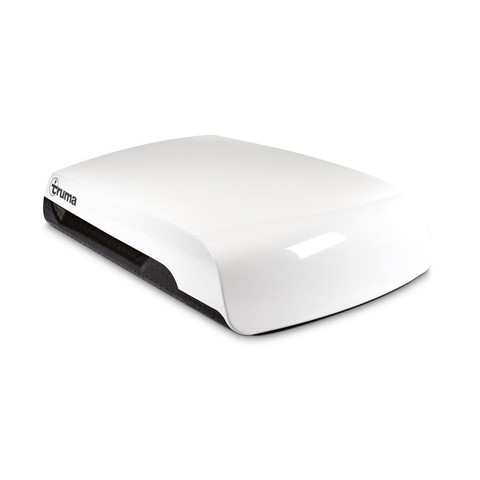
Distinguishing the difference between household and caravan or RV air-conditioners is the first step in finding the right unit for your setup. Whilst both types of units perform the same job of both cooling and heating, they are completely different in design, engineering and pricing - and for very good reason:
Pro's:
- Caravan air conditioners are aerodynamically designed to shelter and deflect the harsh wind and rain conditions that are intensified whilst your vehicle is in motion at 80 - 100km per hour. This prevents water ingress causing rust and short circuiting of the electrical components.
- An RV air con is engineered to withstand bumps and constant vibrations from rough road conditions eliminating the potential for cracked or leaky gas pipes and fittings and major component damage.
- The caravan or RV air conditioner will prove to have a considerable higher life span than your typical house hold air conditioner when used in a mobile application.
- Space saving designs allowing a better and more practical fit to your setup.
- Amperage draw can be a lot lower than their house type counterparts.
- Easily run from most quality branded generators.
Cons:
- Given the design requirements and rigorous testing that is applied to the caravan and RV air conditioner, you will find an elevated price in comparison to your regular household air conditioner.
Comparing the Different Types of Caravan and RV Air Conditioners:
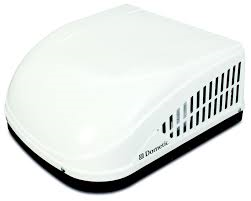
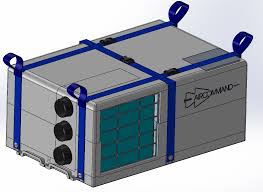
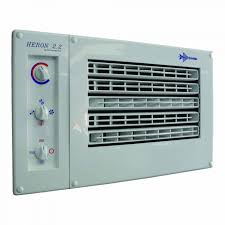
Roof Top Air Conditioners:
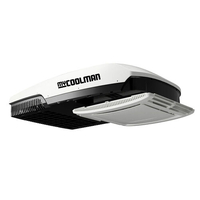
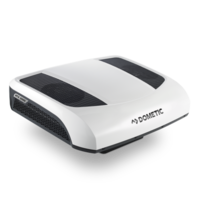
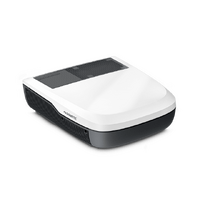
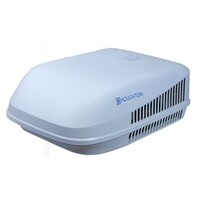
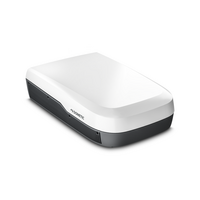
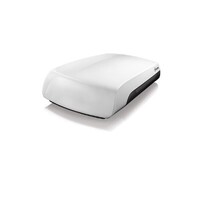
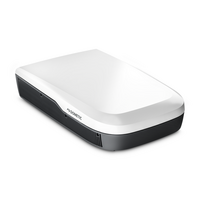
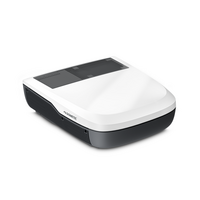
By far the most popular type of RV air conditioner due to its roof mounted design. This allows you to free up space inside your van as well being practical located for easily directing airflow to all areas of your caravan.
Pros:
- Cool air will automatically sink when being distributed from a higher location.
- Will suit most caravan, RV, motor homes and can be purchased as an additional appliance and retro fitted.
- Being roof mounted means you are saving valuable storage space throughout your caravan, RV or motor home.
- Not being floor mounted can minimise noise giving the user a restless and quiet night's sleep.
- Easy to maintain and service.
Cons:
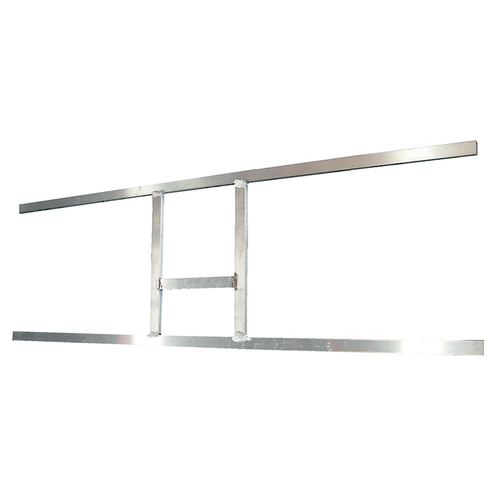
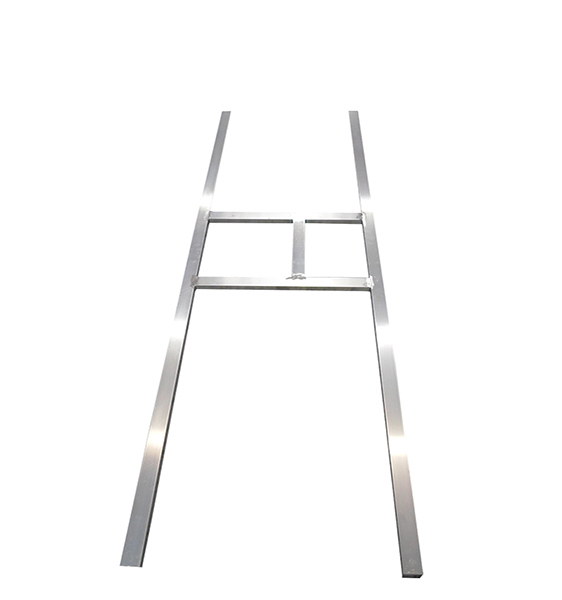
- Camper vans and pop top caravans are designed to be lightweight there for not having the structural rigidity in their roof to with stand the weight of a roof top mounted air conditioner. Although adding an aluminium h-frame can spread the weight through the roof span enabling a roof top mount.
Built in Under Bunk Air Conditioners:
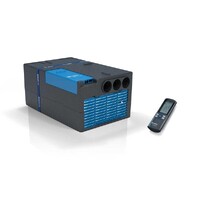
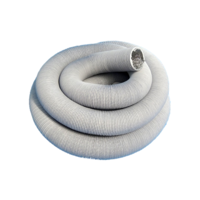
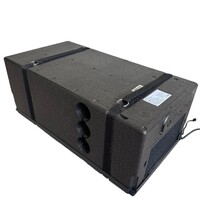
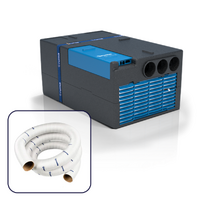
Built in or under bunk air conditioners are most commonly used in pop top and camper trailer applications where the roof structure / design is not capable of withstanding the weight of a roof top mounted air conditioner. Usually mounted underneath a bed or inside a cupboard, these units can be ducted to which ever space necessary.
Pros:
- If your application involves a camper trailer or pop top, a built in or under bunk air conditioner can be a cost-effective solution as opposed to modifying your roof to suit the extra weight of a roof top.
- Suits smaller spaces.
Cons:
- Can take up wanted space inside of your caravan which could be used for storage.
- Not as effective as a split system or roof top airconditioner in a small caravan type application.
Split System / Built in Air Conditioners:
Split System or built in air conditioners are most commonly used in pop top and camper trailer applications where the roof structure / design is not capable of withstanding the weight of a roof top mounted air conditioner. From the internal aspect of your caravan or RV, these air conditioners look like your standard box type when in fact they have a compressor remotely mounted, usually mounted with an external portal leading outside effectively making them a spilt system air conditioning unit. The box style head unit can be mounted under seating areas, up in cupboards or any other cavities that will suit their dimensions.
Pros:
- If your application involves a camper trailer or pop top caravan, a split system air conditioner can be preferable and a cost-effective solution compared to modifying or upgrading your roof to handle the extra weight of a roof top mounted air-conditioner.
- Easy servicing and maintenance.
Cons:
- Can take up wanted space inside of your caravan which could be used for storage. As we all know when loading your caravan, motor home or RV, finding extra room for all your touring necessities can be quite a tactful procedure.
Difference Between Reverse Cycle and Those with Heating Elements:
Reverse Cycle Air Conditioning (Heating):
Pros:
- Efficiency - Reverse cycle air conditioning uses a closed refrigerant system to transfer heat. This does not require high power heating elements consuming excessive power.
- Reverse cycle systems use heat exchange when cooling or heating, cooling pulls the heat from inside to outside, heating moves the outside heat to the inside.
- Ambient temperature - Specific ambient temperatures can have a drastic outcome on the output of your air conditioner. Before making a purchase be sure to consult the manufactures placard determining ambient temperatures.
- Air conditioning manufactures will be fast to point out if their systems operate at sub zero temperatures and very quiet if they do not.
Cons:
- In some circumstances when the outside temperature is below freezing point, it can be a likely event that some of the air conditioners componentry can partially freeze, therefor it can result in little to no heating which can result in an uncomfortable situation.
- Manufactures are always up grading their design flaws in their products to try and advance the systems operations in the sub-zero climates. Upon purchasing your next caravan air conditioner, be sure to check the unit's specifications are compatible to your situated or touring locations.
Heating Element Type Air Conditioners:
Pros:
- Ambient temperatures- A caravan, RV air conditioner designed with a heating element will operate in almost every ambient temperature condition delivered.
Cons:
- Efficiency- The power usage consumed in any sort of heating application where a heating element is involved can be costly and on the lower end of the scale for efficiency.
How Effective is Caravan or RV Air-Conditioning?
Provided you abide by the manufactures guide lines and specifications, caravan and RV air conditioning can be as successful as house hold air conditioning. Be sure to allow for caravan, RV, camper trailer applications without insulated roof or wall panelling as a larger air conditioning unit will be required.
What Size Air Conditioner Do I Need?
A general guideline is there are two main groups of air conditioners.
- 2 - 2.5 kw, suitable for vehicles up to 5 metres in length.
- 3 kw plus, suitable for vehicles up to 7 metres in length.
Most manufactures will now put a vehicle length required in the specification guide lines to make it hassle free when choosing your next caravan, RV air conditioning unit. Air conditioner units are ranked by their effectiveness of cooling/heating of internal capacity in 1 hour, which is called capacity. The power that an air conditioner motor/compressor and fan require can differ to achieve the same capacity, there for its frequent to rate an air conditioners performance by its capacity and not by its power consumption.
Capacity- This is generally measured in kilo watts (kw) or B.T.U (British Thermal Units). For example, a 3-kw cooling capacity air conditioner refers to the amount of actual heat removed from your room in 1 hour. The manufactures specifications should identify what size area a 3-kw rated air conditioner can effectively cool.
Power:
The power required to operate the air conditioner is always a top priority especially if you propose to run off a generator or battery. If you are camping at a caravan park where your purchase includes your power then it's not a great worry about the power being consumed. Alternatively, if your free camping and the air conditioner is being run by a generator or battery you need to be highly aware of the air conditioners consumption: we in fact address this in our article Running Your Caravan Air Conditioner on 12V Battery Power.
Difference Between 360mm or 400mm Roof Aperture?
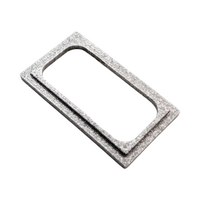
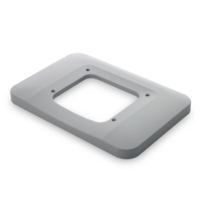
Rooftop mounted air conditioners are designed to fit either a 360mm square aperture on your roof, or a 400mm square aperture. The 400mm firstly was a European design and the 360mm was American based on their 14-inch American manufactured design roof vents. Some air conditioner models deliver and option of roof adapters to suit both apertures, this will be disclosed on the appliances information placard.
What is an Inverter Type Air Conditioner?
The inverter type technology integrated into air conditioners is universally known as soft start technology. This enables the technology of the invertor to run the compressor with minimal power and amp draw compared to most common air conditioner designs. Having an air conditioner that draws less amps on startup will help reduce the excess peak load put onto your generator or other power source.
Installation of Your Caravan Airconditioner
No matter where your travels lead you, a caravan air conditioner is usually the first priority and at the top of the caravan accessories checklist. From the well-seasoned experienced adventurer, to the "Greenie" first timer, everyone loves to take some of the comforts from their everyday lives on the road with them. Installation requirements will vary greatly depending on the type of your RV, although generally a roof top top mounted unit is the easier path to take for installation and tends to be more practical living space wise when mounted up on the roof and out of the way.
For a roof top airconditioning system, the caravan, camper trailers or poptops ability to carry the weight of the unit itself will be the main determing factor. The roof can be reinforced with an external structural H frame usually sold separately should it be required. The H frame distributes the load of the air conditioner evenly throughout the roof span delivering rigidity and strength for a firm grounding for the air conditioner to be mounted on. Otherwise if a rooftop model will not suit your needs, a built in underbunk or split system type aircon will need to be considered.
Installing a built in or split system unit will take up space inside your van, although sometimes it can be less expensive sacrificing some room instead of upgrading the existing roof to handle a rooftop. Underbunk units installed under the bed are a great use of space and split systems face mounts can be mounted up in cupboards and unused microwave spaces.
All caravan air conditioners come equipped with a fitting, installation and owner's manual. For the best results, it is suggested that the unit be installed by a qualified tradesman and signed off by a licenced electrician. In some split system application applications, there are requirements of refrigerant gas lines to be connected which have to be carried out by a licenced air conditioner specialist.
Caravan Air Conditioner Brands
Choose from our wide range of air conditioners for your caravan, motorhome, bus, truck or trailer, ranging from inverter rooftop or under bunk air conditioners, we cater for every application of the recreational vehicle industry. Our enormous range of caravan air conditioners contain only deluxe brands ranging from Dometic to Truma and newer brands such as MyCoolman.
The Dometic Air conditioner range are affiliated with the global Dometic assortment of products and appliances for the RV industry. True to their reputation of progressive tech innovation in the RV industry, Dometic have delivered a recreational vehicle air conditioner built with an inverter compressor. The latest Dometic FreshJet FJZ Series features industry-leading inverter technology, built-in air purifiers and a model with a massive 4kW for large vans.
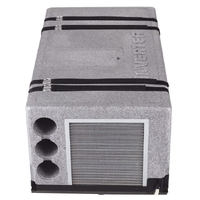
The Truma Saphir Comfort is a dominant under bunk air conditioning system that cools and heats super efficiently. The biggest advantage of the Truma Saphir is being able to install the unit in confined compact storage areas there for running your ducting to a preferred location. Given the design of the storage compartment air conditioning system the Truma Saphir elevates your installation requirements enabling you to mount the unit in almost every application on caravans, motor homes, buses, boats, trucks, and even trailers. Operating in cooling mode the system will dehumidify and clean the air with its particle and fluff filters producing the freshest, cleanest conditioned air possible. Also given you can operate the Saphir on heat mode, it produces an output of 1700w of heating creating a satisfying warmth for the adventurous tourer in those cooler months of the year. The storage compartment conditioner can be calibrated via remote control or adjusted through an additional Inet ready control panel, (to be purchased separately). The compact reverse cycle air conditioner has incorporated multiple advantages such as a system that dehumidifies and cleans the air ideally for allergy sufferers, four operating modes, air circulation, cooling, heating, and automatic also endeavouring to take the top rank as the smallest air conditioning system in its class.
- weighing in at just 23.5 kilograms
- Temperature Calibrations in one-degree increments
- Smallest compact design in its class
- Compatible to under bunk installation requirements
- heating and cooled air via ducting
Caravan Air Conditioning Specialists
Our specific Caravan Air Conditioner sub categories are:
-
Rooftop Air Conditioners: Space-saving and highly efficient. Shop the latest Dometic Freshjet Series 7 and Truma Aventa models for full-sized vans.
-
Under-Bunk & Built-In: Perfect for Pop-Tops and Camper Trailers where roof weight is restricted. Shop Truma Saphir, Cool J and Furrion ducted systems.
-
Portable Air Conditioners: No installation required. Shop 240V and 12V portable cooling solutions.
Need help? Click here: